



An attribution model is the rule by which you distribute the value of a conversion across the marketing touchpoints involved. It decides which channel gets the credit for a sale – and thus where your budget flows. The models range from simple rules like last-click through data-driven attribution to behavior-based, AI-powered approaches that measure the actual impact of each touchpoint. Which one is right depends on your customer journey, your goals and your data quality.
In this article you will learn which attribution models exist, how they distribute revenue, where their strengths and weaknesses lie – and why the industry is increasingly moving away from rigid rules.
Key Takeaways
- An attribution model distributes the value of a conversion across the touchpoints of the customer journey.
- Single-touch models (last-click, first-click) assign everything to one contact; multi-touch models (linear, time-decay, position-based, data-driven) spread it across the whole journey.
- Google abolished the four rule-based models in GA4 and Google Ads in 2023. Today the standard is data-driven attribution, with only last-click remaining as an alternative.1
- The evolution moves away from rigid rules of thumb, beyond data-driven attribution – toward behavior-based AI attribution that measures the true incrementality of every touchpoint.
- Every model is only as good as the data beneath it – and that data has been patchy since ATT and the consent requirement, even without the much-invoked end of the cookie.
What are attribution models?
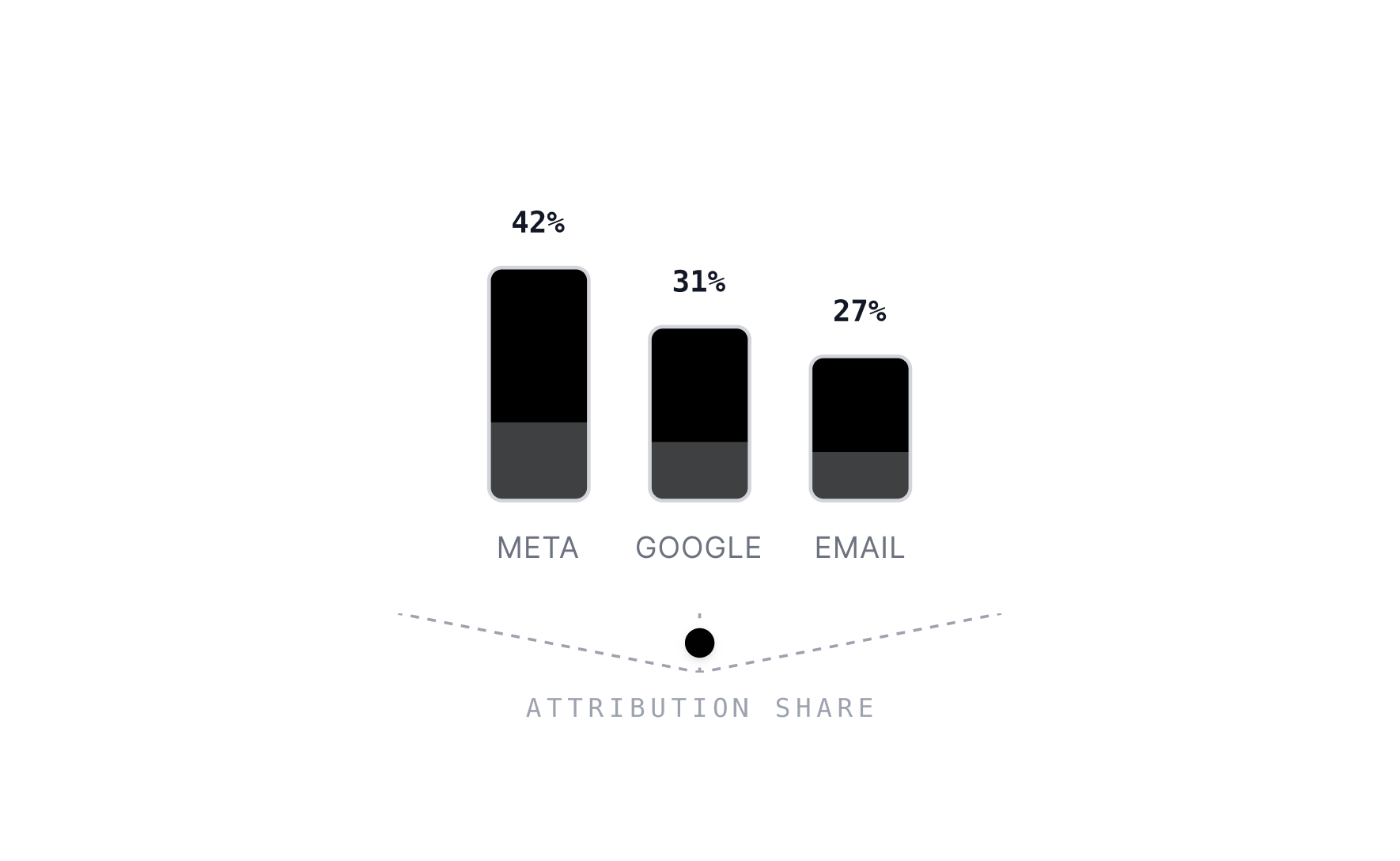
An attribution model is the method you use to decide what share of the credit for a conversion each touchpoint receives. Most purchase decisions do not happen after a single click, but across several contacts with your brand: an ad on Instagram, later a Google search, then a newsletter and finally the purchase.
Without an attribution model you wouldn't know which of these steps earned the sale. The model is therefore the lens through which you view the impact of your channels – and the choice of lens changes the picture. For how attribution works in the bigger picture, see the overview of marketing attribution.
Why your choice of model decides your budget
Take two channels: Instagram kicks journeys off, Google Search closes them. Under the last-click model Google gets all the credit; under first-click Instagram does. The same data, the opposite conclusion.
Anyone optimizing for last-click will, in case of doubt, cut the budget for exactly the channel that creates the demand in the first place. An attribution model is therefore not reporting cosmetics, but a budget decision.
The most important attribution models at a glance
Broadly, the models split into two camps. Single-touch models (last-click, first-click) assign the entire success to one single contact. Multi-touch models (linear, time-decay, position-based and data-driven) spread the value across several touchpoints of the journey. These six are the ones you'll meet most often in practice – complemented by behavior-based AI attribution as the logical next step:
| Model | Who gets the credit | Strength | Weakness |
|---|---|---|---|
| Last-Click | the last click before purchase | simple, available everywhere | ignores the entire lead-up |
| First-Click | the first contact | shows what creates demand | blind to the close |
| Linear | all touchpoints equally | includes the whole journey | treats every contact as equally important |
| Time-Decay | later contacts more strongly | emphasizes the closing phase | underrates early demand |
| Position-based | mainly first and last contact | credits entry and close | weighting stays an assumption |
| Data-driven | by weighting learned from the data | learns weights from real conversion paths | detects correlation, not true incrementality |
| Behavior-based AI attribution | by measured incrementality of each touchpoint | measures true incrementality instead of mere correlation | requires complete data and a specialized solution |
Last-Click attribution
The last-click model assigns the entire conversion to the last click before the purchase. It is the default of many tools and easy to understand. The price: everything that convinced the customer beforehand stays invisible. Channels at the start of the journey are made to look systematically worthless, even though they create the demand.
First-Click attribution
First-click is the mirror image: the first contact gets everything. That is useful for seeing which channels trigger new demand, but blind to everything that leads to the close afterward. In practice, first-click overrates awareness channels just as strongly as last-click underrates them.
Linear attribution
Linear attribution distributes the value evenly across all touchpoints. It is the first honest step away from the single contact, because the whole journey counts. Its weakness is the leveling: a fleeting banner contact counts as much as the decisive consultation that closed the sale.
Time-decay attribution
This model weights later contacts more heavily than early ones because they are closer to the purchase. That makes sense for longer journeys with a clear closing phase. The flip side: the first, often decisive, nudge is structurally devalued.
Position-based attribution (U-shaped)
A common scheme gives the first and the last contact 40 percent each, with the remaining 20 percent spread across the contacts in between. This credits both the entry and the close. But here too the weighting remains a fixed assumption, not a measurement.
Data-driven attribution
Data-driven attribution (DDA) does not assign the shares by a fixed rule, but learns the weighting from the conversion paths in your data. It is today the standard in GA4 and Google Ads and also sits inside tools like Admetrics (Prism) or Triple Whale. Compared to rigid rules, that is a clear step forward. Its limit: DDA learns patterns from aggregated, often modeled conversion data. It detects correlations, but does not measure whether a touchpoint actually caused the conversion – that is, its true incrementality.
From rigid rules through data-driven to behavior-based attribution
Attribution evolves in stages. First the rigid rules (last-click and co.), which follow a fixed assumption. Then data-driven attribution, which learns the weights from the data instead of prescribing them. How serious this second step is meant to be is shown by Google: since 2023 the four rule-based models – first-click, linear, time-decay and position-based – have been abolished in GA4 and Google Ads; the standard is data-driven attribution, with only last-click remaining as an alternative.1
The third step goes beyond data-driven attribution: behavior-based, AI-powered attribution. It does not only learn correlations from conversion paths, but measures – for every single journey, based on user behavior – the true incrementality of each touchpoint, that is, its actual, causal contribution to the conversion. This is exactly where Tracify comes in.
Which attribution model fits you?
Our clear recommendation: steer your marketing with a behavior-based, AI-powered attribution – and do so for practically every shop. It is the only method that measures the actual incrementality of each touchpoint, instead of deriving it from rigid rules or learned patterns. For day-to-day budget steering it is therefore the standard choice, not the exception.
The static models keep their value, but as a special analysis for targeted questions, not as the basis for your budget decisions:
- Last-click: a quick sanity check, or when only the closing channel interests you.
- First-click / position-based: to see which channels at the top of the funnel trigger demand.
- Linear / time-decay: for a rough overview of how contacts spread across the journey.
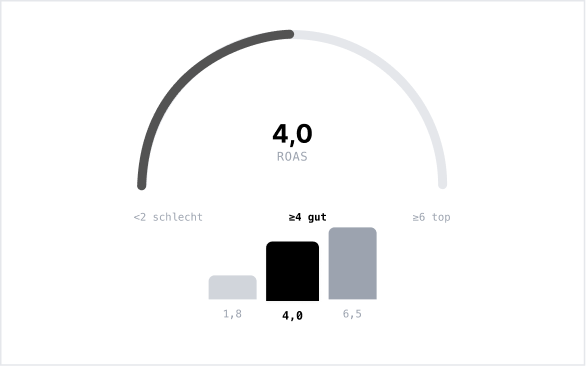
More important than the individual model is consistency: anyone who keeps switching compares apples to oranges. And a target metric like ROAS is only comparable across channels if the attribution behind it is right.
The core problem: attribution is only as good as the foundation it attributes on
No matter how sophisticated the model: an attribution model can only distribute what it sees. If part of the journey is missing, even the cleverest algorithm weights revenue it doesn't even know about.
And that is exactly the case since the privacy upheavals. This is why a simple model on complete data often beats a sophisticated data-driven attribution that computes on patchy platform data. Because data quality is not a buzzword, but a chain: a touchpoint you don't capture, you can't assign to a customer journey – and an unassigned touchpoint no attribution can weight. First comes this chain of capturing, matching and attributing, then the model.
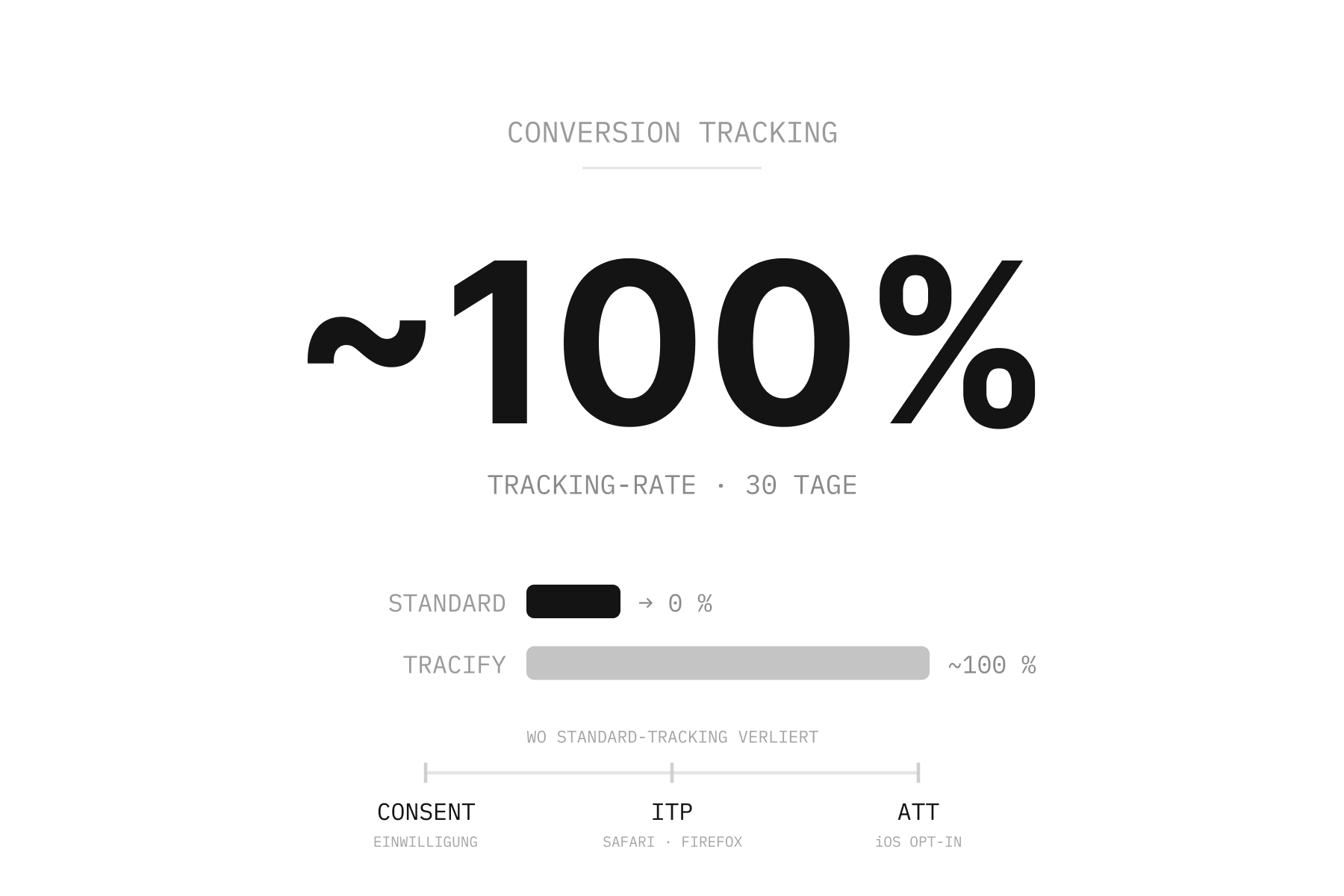
Since Apple's App Tracking Transparency (ATT) and the consent requirement, the platforms no longer see a substantial part of the journeys. In Germany the ATT opt-in rate was, according to AppsFlyer, just 47 percent in early 20243 – so roughly half of iOS users can no longer be assigned on an ID basis. Meta put the revenue impact of ATT for 2022 alone at roughly US$10 billion.4 If touchpoints are invisible, the model distributes revenue across a fraction of the journey and overrates the channels that are measurable.
Tracify's approach: behavior-based AI attribution instead of data-driven attribution
Tracify deliberately does not use classic data-driven attribution, the kind built into GA4, Google Ads or other tools. Instead, Tracify combines two things most setups lack: a complete data foundation and a behavior-based AI attribution that measures the true incrementality of every touchpoint.
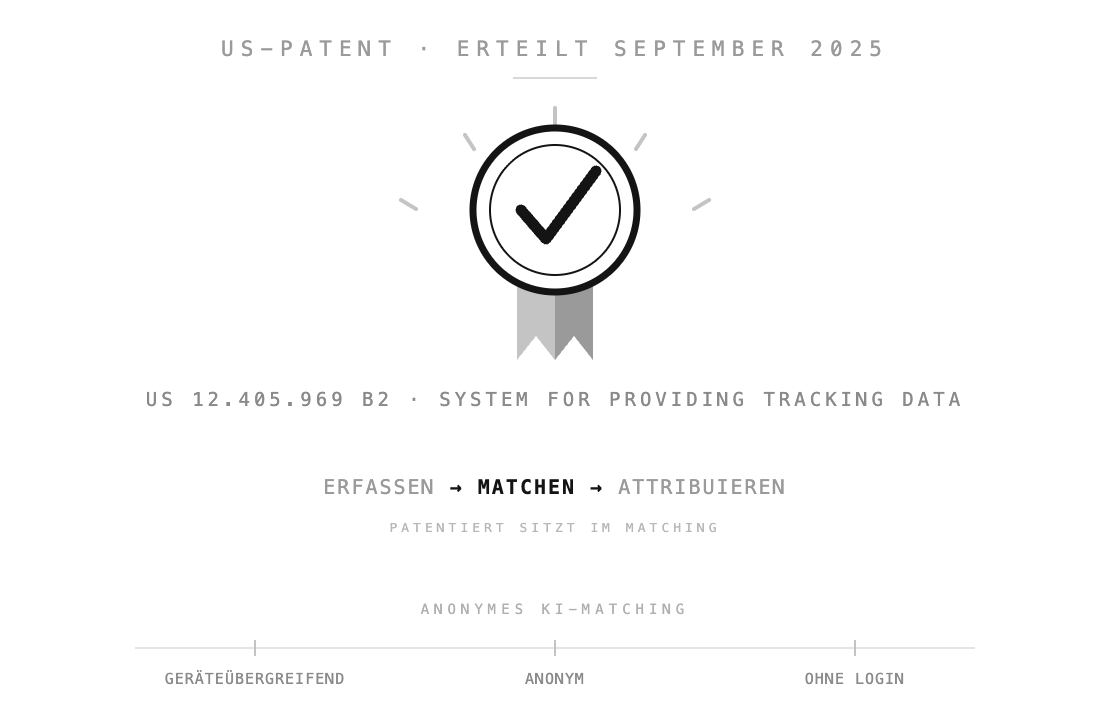
Instead of relying on consent-requiring cookies, Tracify captures customer journeys via a patented, consent-free hybrid tracking that is certified as consent-free by the BISG and processed exclusively on German servers. According to Tracify, this brings up to 40 percent more relevant data points into the system, at a tracking rate of nearly 100 percent over 30 days, while classic setups lose toward zero over the same period.5
On top of that sits the behavior-based AI attribution. It is trained on customer-journey data from billions in ad spend and evaluates every single journey based on actual user behavior – by intensity, sequence and relevance of the touchpoints. The goal is not to learn a correlation from conversion paths, but to measure the true incrementality of each touchpoint: its actual, causal contribution to the conversion. So you see not only which contact came last, but which one truly caused the sale.
What this delivers in practice is shown by the customer numbers: Juniqe raised its Marketing Efficiency Ratio (MER) by 48 percent, Travelcircus halved its CPO on Meta and achieved a 100 percent MER increase.5 If you want to know which advertising measures truly bring your sales, instead of guessing, then with Tracify's AI attribution you get a weighting based on complete data – complemented by the GDPR-compliant hybrid tracking and AI matching that supply this data in the first place.
Frequently asked questions about attribution models
What is the best attribution model?
Among the classic models there is no universal winner. The biggest difference is made less by the model than by data quality and an attribution that measures true incrementality – that is, the causal contribution of each touchpoint. That is exactly what Tracify's behavior-based AI attribution does, while last-click is only good as a quick entry point.
What is data-driven attribution?
A model that does not set the weighting of touchpoints by rule, but learns it from the conversion paths in the data. It is the standard in GA4 and Google Ads. However, it mainly detects correlations; the actual incrementality of a touchpoint is only measured by a behavior-based attribution.
What is the difference between data-driven and behavior-based attribution?
Data-driven attribution learns weights from aggregated conversion paths, that is, from correlations. Behavior-based AI attribution, as Tracify uses it, evaluates each journey individually based on user behavior and measures true incrementality – the causal contribution of each touchpoint.
What is the difference between single-touch and multi-touch attribution?
Single-touch models (last-click, first-click) assign the entire success to one single contact. Multi-touch models (linear, time-decay, position-based, data-driven) spread the value across several touchpoints and reflect the journey more realistically.
Which attribution model do Google and Meta use?
Google Ads and GA4 have used data-driven attribution by default since 2023. The old rule-based models were abolished, with only last-click remaining as an option.1 Meta assigns conversions in Ads Manager via its own, window-based attribution model.
Are third-party cookies really abolished in 2026?
No. Google scrapped the planned removal of third-party cookies in Chrome in 2024 and largely wound down the Privacy Sandbox in 2025.2 The data gap for attribution arises anyway – through the consent requirement, Apple's ATT and cookie blocking in Safari and Firefox.
Conclusion
Attribution models are not a technical detail; they determine which channels you credit with success and where your budget flows. Rule-based models are simple rules of thumb with known blind spots. Data-driven attribution comes closer to reality, but remains correlation. Only behavior-based AI attribution measures the true incrementality of each touchpoint – and only as well as the data beneath it is complete.
So the rule is: decide deliberately, stay consistent, and take care of the data quality on which every attribution rests first. That is exactly the lever Tracify addresses with complete data and behavior-based AI attribution.
- Google Ads Help – About attribution models (as of 2026): support.google.com/google-ads/answer/6259715
- Google Privacy Sandbox – Third-party cookies (as of 2025/26): privacysandbox.google.com/cookies
- AppsFlyer – ATT opt-in rates, three years on (2024-04-26): appsflyer.com/company/newsroom/pr/att-data-findings
- CNBC – Facebook says Apple iOS privacy change will cost $10 billion this year (2022-02-02): cnbc.com/2022/02/02/facebook-says-apple-ios-privacy-change-will-cost-10-billion-this-year.html
- Tracify – product information and metrics (first-party, as of 2026): tracify.ai
- AdExchanger – Google Isn't Launching A User Choice Prompt For Third-Party Cookies In Chrome (2025): adexchanger.com/data-privacy/google-isnt-launching-a-user-choice-prompt-…