


Marketing attribution is the method you use to assign revenue and conversions to the marketing touchpoints that were involved in them. It answers the question of which channel really caused a sale, which makes it the foundation of every budget decision: without it, you scale blind. There are single- and multi-touch approaches as well as three methods (MTA, MMM and incrementality). How accurate attribution is depends less on the model than on the quality of the data underneath it.
In this article you will learn what marketing attribution is, why it decides how your budget is spent, which models and methods exist, where the biggest pitfalls lie and how to roll it out step by step.
Key Takeaways
- Marketing attribution assigns revenue and conversions to the touchpoints involved, so you can see which channel really works.
- Single-touch credits everything to one contact (last/first click), multi-touch spreads the value across the whole journey.
- Three methods complement each other: multi-touch attribution (MTA) measures per touchpoint, marketing-mix modeling (MMM) works top-down, incrementality tests measure the causal uplift.
- The biggest hurdle is not the death of the cookie, but the data gap from consent requirements and Apple's ATT - in Germany the ATT opt-in rate was only 47 percent.
- Every attribution is only as good as its data: data quality comes first, then the model.
What is marketing attribution?
Marketing attribution is the process you use to distribute the success of a conversion across the marketing touchpoints that led to it. Almost no purchase happens after a single click. A typical customer first sees an ad on Instagram, later searches for the brand on Google, reads a review, clicks a newsletter and only buys after that. Attribution answers the question: which of these steps earned the sale, and what share of it?
The term is used for two things: for the specific attribution model (the rule by which value is distributed) and for the broader discipline that uses tracking, models and methods to measure how much each channel contributes to revenue. That is exactly what this article is about: the big picture.
Why is marketing attribution important?
Attribution is not reporting cosmetics, it is the foundation of every budget decision. Take two channels: Instagram kicks off journeys, Google Search closes them. If you credit the sale only to the last click, Google gets all the recognition and Instagram gets nothing, even though it created the demand in the first place. Anyone who optimizes on that basis may cut exactly the channel that drives growth at the top of the funnel.
Without reliable attribution you optimize for the numbers that shout loudest, usually the platforms' own. And they have an interest in claiming as many conversions as possible for themselves. Marketing attribution is the attempt to break out of that conflict of interest and see what actually sells.
Single-touch vs. multi-touch attribution
The first fundamental distinction concerns the question of how many touchpoints get any recognition at all.
- Single-touch attribution credits the entire value to a single contact, either the last one (last click) or the first (first click). Easy to implement, but it ignores almost the whole journey.
- Multi-touch attribution (MTA) spreads the value across several touchpoints, for example linearly, time-decay based, position based or data-driven. It reflects reality much better, but it needs a complete data base across the entire journey.
For most e-commerce brands with several active channels, a multi-touch approach is the more realistic choice. The only question is how good the data it runs on really is.
Attribution models at a glance
Within the multi-touch world there are several classic models that differ in how they weight value: last click, first click, linear, time-decay, position based (U-shaped) and data-driven. Each makes a different assumption about which contact counts for how much, and so delivers a different picture of the same channel.
Which model fits when, what advantages and disadvantages each approach has and why Google has since scrapped the rule-based models is covered in detail in our in-depth comparison of attribution models. For this foundational knowledge it is enough to say: a model is a rule for distributing value, and the choice of rule changes the result.
The three methods: MTA, MMM and incrementality
Beyond the individual models there are three fundamental methods for measuring the effect of marketing. They do not exclude each other, they illuminate the same question from different angles.
| Method | Principle | Strength | Limitation |
|---|---|---|---|
| MTA Multi-Touch Attribution |
distributes value bottom-up across the individual touchpoints of a journey | granular per channel and campaign, close to the real journey | needs a complete data base, suffers under consent and ATT |
| MMM Marketing-Mix-Modeling |
works top-down: a statistical model of spend against revenue | cookieless, also captures offline, brand and long-term effects | aggregated, no journey detail, data-hungry and slow |
| Incrementality Uplift / geo tests |
measures the causal uplift via test against control group | shows the true, causal contribution of a channel | effort-intensive and point-in-time, not always-on for every channel |
MTA is the standard in digital e-commerce because it can be steered per campaign. MMM is coming back because it works without personal data and also measures what no click captures. Incrementality is the most honest test because it separates cause and effect, but it is too effort-intensive for the day-to-day of every channel. In practice, whoever combines the strengths wins: a granular, always-on attribution on complete data whose results can be cross-checked with incrementality logic. You can read more about this on our page on Comprehensive Attribution.
Deterministic, probabilistic or AI-based?
A second important distinction concerns the way touchpoints are brought together into a journey in the first place.
- Deterministic: touchpoints are linked via a unique, shared identifier (for example a login or a hashed email). Very precise, but it breaks down as soon as that identifier is missing, and that is often the case since ATT and consent requirements.
- Probabilistic: the assignment is modeled through probabilities from signals such as device, time and behavior. That fills gaps, but it is less exact than a real ID.
- AI-based: modern approaches combine a data base that is as complete as possible with a behavior-based evaluation of each individual journey. The goal is not to learn a correlation from conversion paths, but to measure the true incrementality of each touchpoint: its actual, causal contribution.
The step from rigid rules through data-driven attribution to behavior-based AI attribution is the real line of development in the industry. Because the more incomplete the data becomes, the more important the question of how an approach handles gaps without lapsing into guesswork.
The biggest challenges of attribution
Attribution has not become easier in recent years, it has become harder. Four hurdles stand out:
- Consent and GDPR: without opt-in, a large share of users can no longer be tracked in the classic way. Every touchpoint that is not captured is missing from the journey, and therefore from the attribution.
- Apple's App Tracking Transparency (ATT): in Germany the opt-in rate was only 47 percent according to AppsFlyer in early 20243. Roughly half of iOS users can therefore no longer be assigned on an ID basis. Meta put the revenue effect of ATT for 2022 alone at roughly US$10 billion.4
- Cross-device and long journeys: customers switch between smartphone, desktop and app. Without a shared bracket, one journey falls apart into several seemingly separate ones.
- Walled Gardens: Meta and Google report conversions in their own systems and with their own attribution windows. Each platform tends to claim too much for itself, and in total that produces more conversions than actually took place.
A common misconception is that the core problem is the disappearance of third-party cookies. In fact, Google reversed the deprecation in Chrome in 2024 and largely wound down the Privacy Sandbox in 2025.2 So the data gap is not torn open by a single browser, but by the combination of consent requirements, ATT and cookie blocking in Safari and Firefox. That leads to the most important principle of all: every attribution is only as good as the data underneath it. A simple model on complete data beats a sophisticated attribution on patchy platform data. Data quality first, then the model.
Rolling out marketing attribution: in 4 steps
You do not have to start with the perfect model. A more sensible approach is an iterative build:
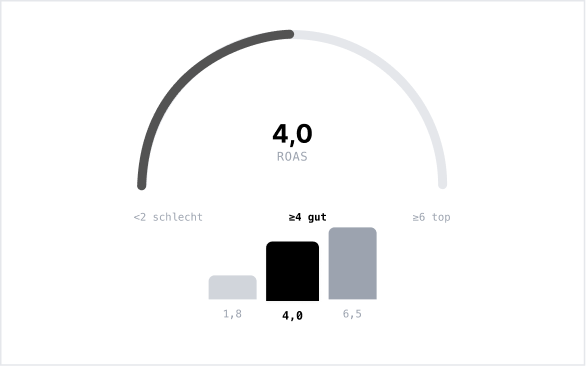
- Define the goal and the decision. First clarify which decision the attribution is meant to support: shifting budget between channels, evaluating campaigns or understanding the funnel. That determines which KPI (e.g. ROAS, CAC or MER) sits at the center.
- Secure the data base and tracking. Make sure touchpoints can be captured and assigned to a journey in the first place. What you do not capture, you cannot match, and what you do not match, you cannot attribute. This step decides everything that follows.
- Choose the method and model. Adapt the approach to your journey length, channels and data maturity. For most digitally driven shops, a multi-touch attribution on data that is as complete as possible is the right core.
- Steer and validate iteratively. Stay consistent so that time periods stay comparable, and occasionally cross-check the results with incrementality tests. That is how you notice whether a channel really delivers or just looks good.
The Tracify approach: behavior-based AI attribution on complete data
Tracify deliberately does not do classic data-driven attribution, of the kind many standard analytics and attribution tools use. Instead, Tracify combines two things that most setups lack: a complete data base and a behavior-based AI attribution that measures the true incrementality of each touchpoint. This follows exactly the chain from the 4-step plan: capture, match, attribute.
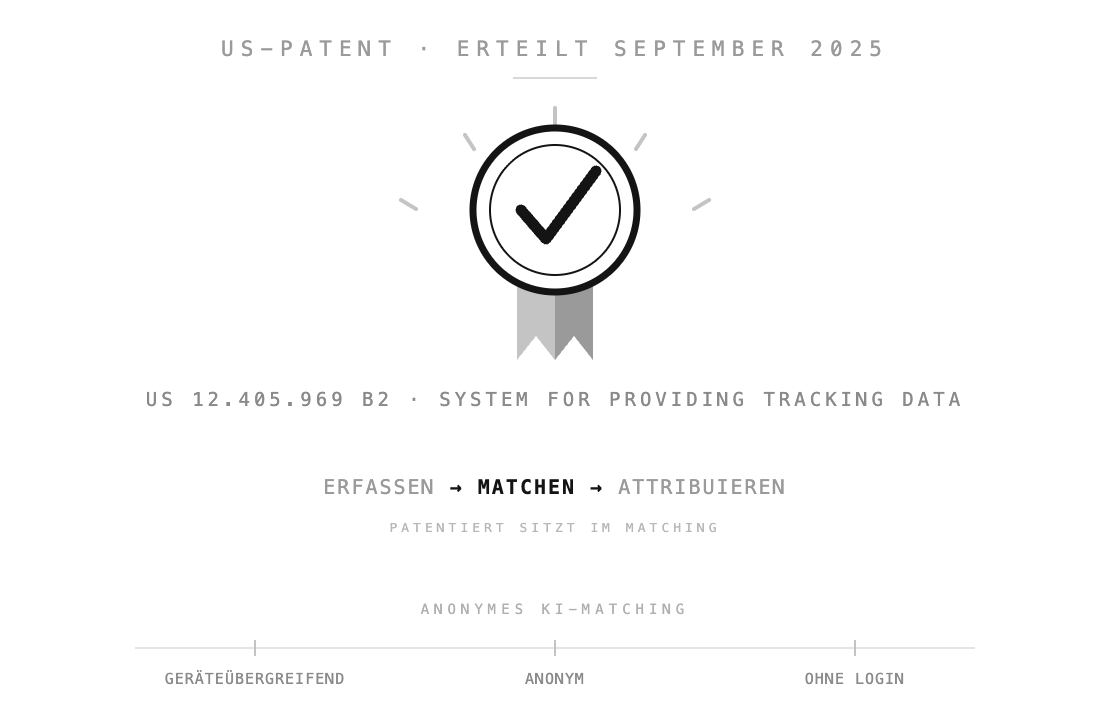
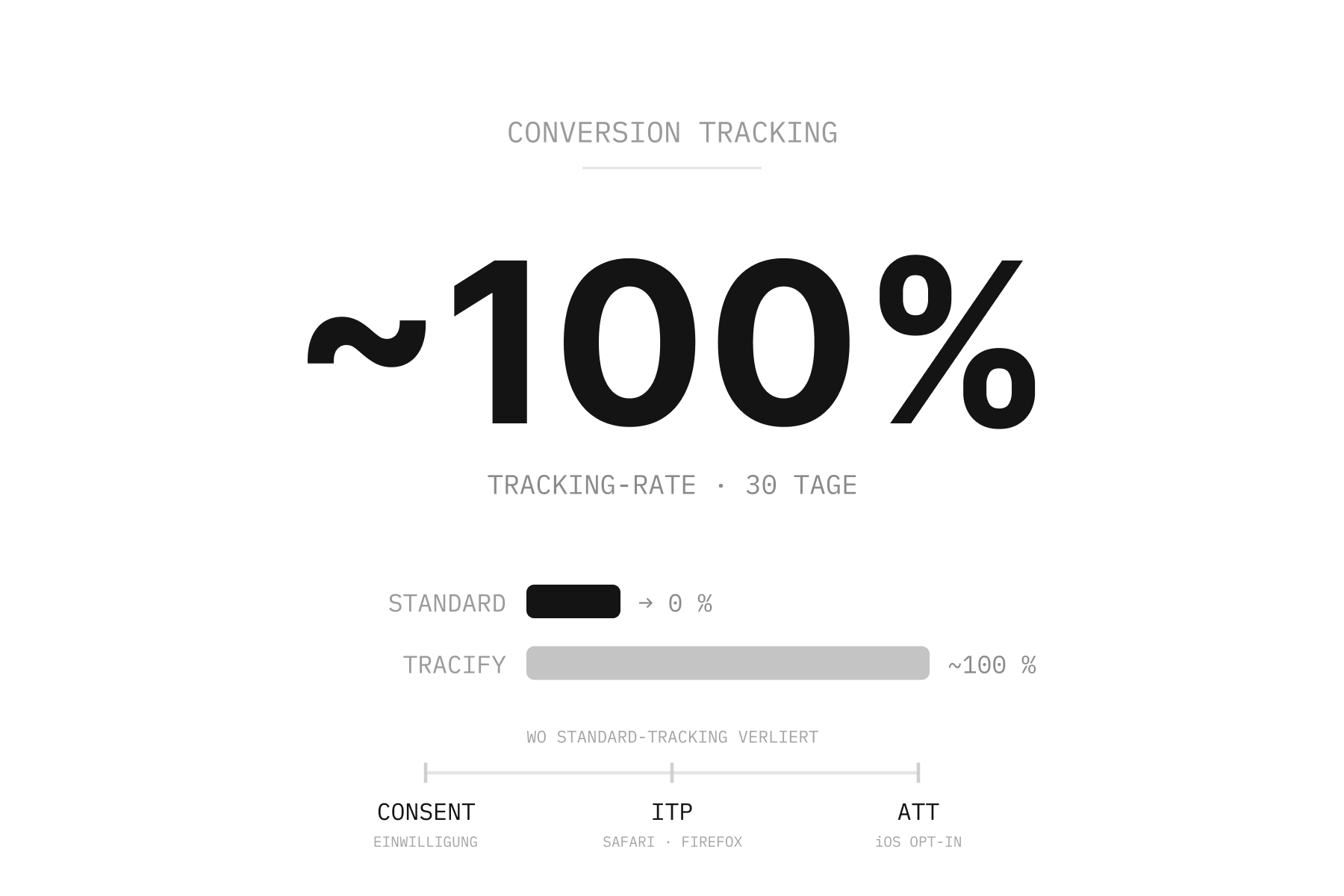
Capture: instead of relying on consent-requiring cookies, Tracify captures customer journeys via a patented, consent-free hybrid tracking that is certified as consent-free by the BISG and is processed exclusively on German servers. According to Tracify, this brings up to 40 percent more relevant data points into the system, at a tracking rate of nearly 100 percent over 30 days, while classic setups lose toward zero in the same period.5
Match and attribute: on this complete base, an AI matching brings the touchpoints together into real journeys. On top of that sits the behavior-based AI attribution, trained on customer-journey data from billions in ad budget and more than 1,000 active shops. It evaluates each individual journey based on actual user behavior, by intensity, order and relevance of the touchpoints, and thereby measures the causal contribution of each contact instead of just a correlation from conversion paths.
What this delivers in practice is shown by the customer figures: according to Tracify, Juniqe increased its marketing-efficiency ratio (MER) by 48 percent, Travelcircus halved its CPO on Meta.5 If you want to know which channel really brings your sales, instead of guessing, Tracify's AI attribution gives you a weighting based on complete data, complemented by the GDPR-compliant hybrid tracking that delivers this data in the first place.
Frequently asked questions about marketing attribution
What is marketing attribution, simply explained?
Marketing attribution assigns a sale to the ad contacts that led to it. It shows which channel contributed how much to revenue, so you can steer your budget toward what really works, instead of crediting everything to the last click.
What is the difference between single- and multi-touch attribution?
Single-touch attribution credits the entire success to a single contact, usually the last or the first. Multi-touch attribution spreads the value across several touchpoints of the journey and thereby reflects more realistically how a purchase actually comes about.
MTA or MMM - which is better?
Both measure the same question from different angles. Multi-touch attribution (MTA) is granular per channel and ideal for day-to-day steering, but needs good data. Marketing-mix modeling (MMM) works top-down, gets by without personal data and also captures offline and brand effects, but is aggregated and slow. In practice they complement each other best.
How does attribution work without cookies?
Via server-side and consent-free tracking, aggregated methods such as MMM or AI-supported approaches that bring journeys together even without a continuous ID. What matters is a data base that is as complete as possible, because without captured touchpoints no model can attribute correctly.
Which tools are there for marketing attribution?
The range runs from the built-in tools of the ad platforms through specialized attribution and analytics tools to solutions like Tracify. The difference lies less in the model than in the data foundation: Tracify relies on complete first-party data and behavior-based AI attribution instead of classic data-driven models on patchy platform data.
Conclusion
Marketing attribution is the discipline that makes visible which channel really brings your sales. It begins with the choice between single- and multi-touch, leads through concrete models to the three methods MTA, MMM and incrementality, and ends with the question of how touchpoints are brought together in the first place. As different as these approaches are, they share one prerequisite: complete data.
That is why the rule for getting started is: define your decision, secure the data base first, then choose a method and stay consistent. This is exactly the foundation Tracify builds on, with complete first-party data and a behavior-based AI attribution that not only sees the last click, but measures the true incrementality of each touchpoint.
- Google Ads Help – About attribution models (as of 2026): support.google.com/google-ads/answer/6259715
- Google Privacy Sandbox – Third-party cookies (as of 2025/26): privacysandbox.google.com/cookies
- AppsFlyer – ATT opt-in rates, three years on (04/26/2024): appsflyer.com/company/newsroom/pr/att-data-findings/
- CNBC – Facebook says Apple iOS privacy change will cost $10 billion this year (02/02/2022): cnbc.com/2022/02/02/facebook-says-apple-ios-privacy-change-will-cost-10-billion-this-year.html
- Tracify – product details and metrics (first-party, as of 2026): tracify.ai