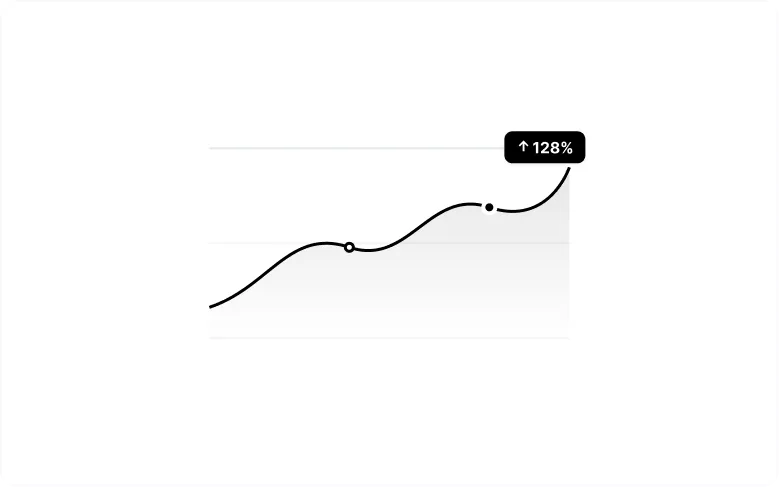



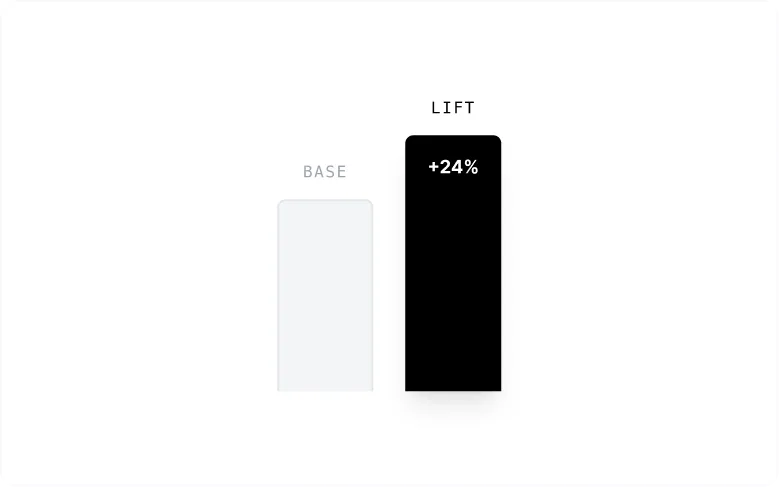
Incrementality measurement shows whether marketing measures generate additional conversions — or simply measure effects that would have occurred anyway.
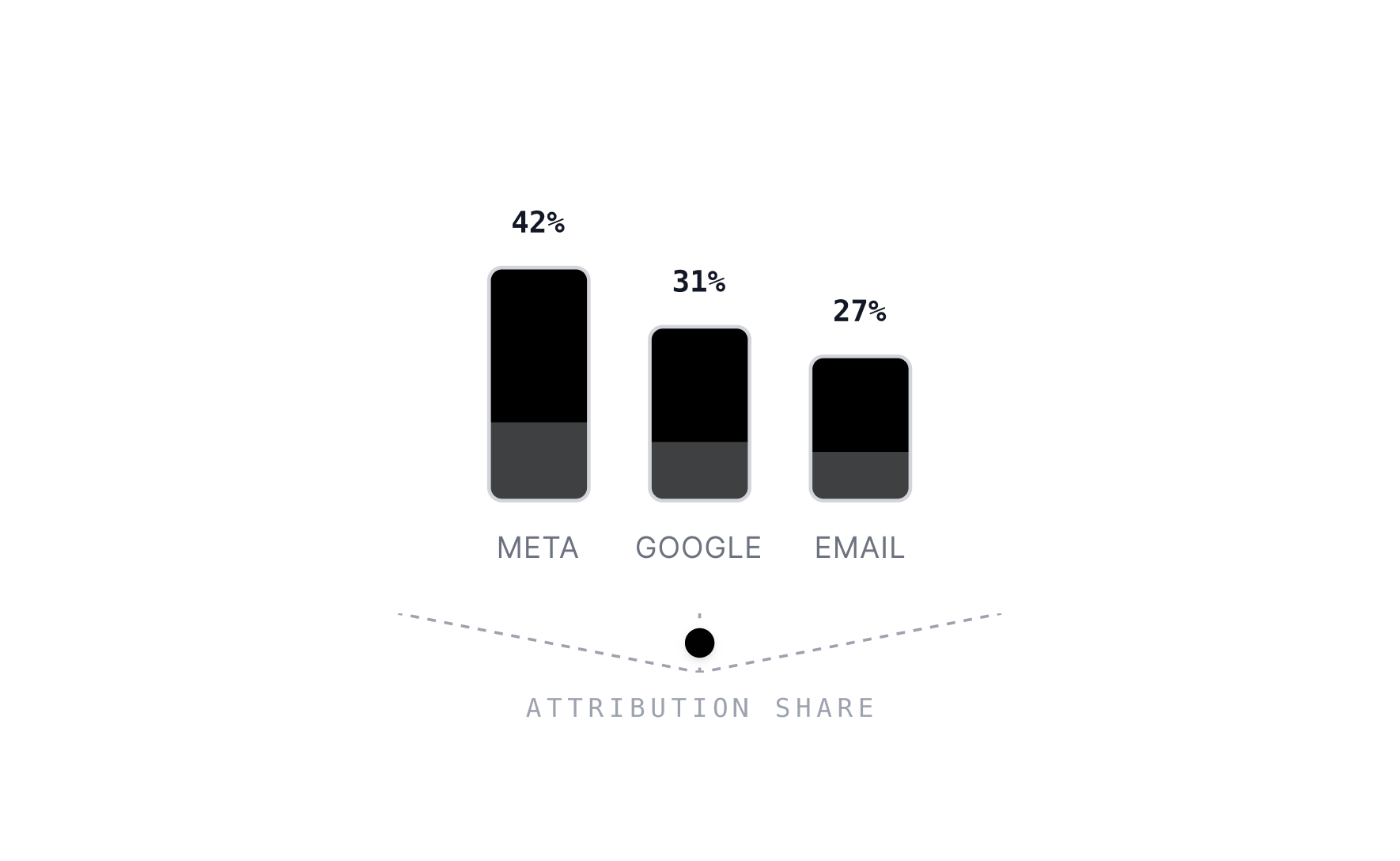
AI-powered attribution dynamically evaluates and takes into account the real added value of each channel cross-channel synergies.
Benefits of incrementality measurement:
- Replaces assumptions with reliable data
- Shows what really drives growth
- Enables targeted budget reallocation
- Increases efficiency and ROI sustainably
Without this perspective, companies often invest too much in channels without real uplift. Understanding incrementality reduces wastage and makes more informed decisions.
Central levers for better incrementality measurement
In order to precisely measure and continuously improve incrementality, the following factors are decisive:
- Use AI-based attribution
- Machine learning models realistically depict complex journeys.
- Adjust attribution models regularly
- User behavior and channels are constantly changing.
- Prioritize data quality
- Clean, consistent data is the basis of every analysis.
- Test & validate
- A/B testing and holdouts make impact measurable.
- Work across teams
- Joint interpretation increases the quality of decisions.
Using data as a strategic competitive advantage
With granular attribution data, companies recognize:
- the most effective channels
- The best time to speak
- The right message for each target group
In addition, detailed insights enable a Optimization down to creative level — small adjustments with a big impact.
By combining journey understanding and incrementality models, companies can:
- Invest more intelligently
- Minimize stray losses
- Build scalable growth
Conclusion: Turning insights into impact
Companies that rely on modern attribution and incrementality measurement gain a clear competitive advantage.
Tracify combines AI-powered attribution, incrementality measurement, and cross-channel synergies in a single platform.
This allows marketers to free themselves from estimates and base decisions on reliable real-time data.
The result: better budget decisions, more efficient scaling, and measurable growth — even in highly competitive markets.